
Facilities
Step into a world where medieval architecture blends seamlessly with the tranquillity of nature, offering a unique sanctuary for discovery and peace.
Architecture
The Abbey’s architecture tells a story spanning over 800 years, a testament to evolving design and enduring craftsmanship.
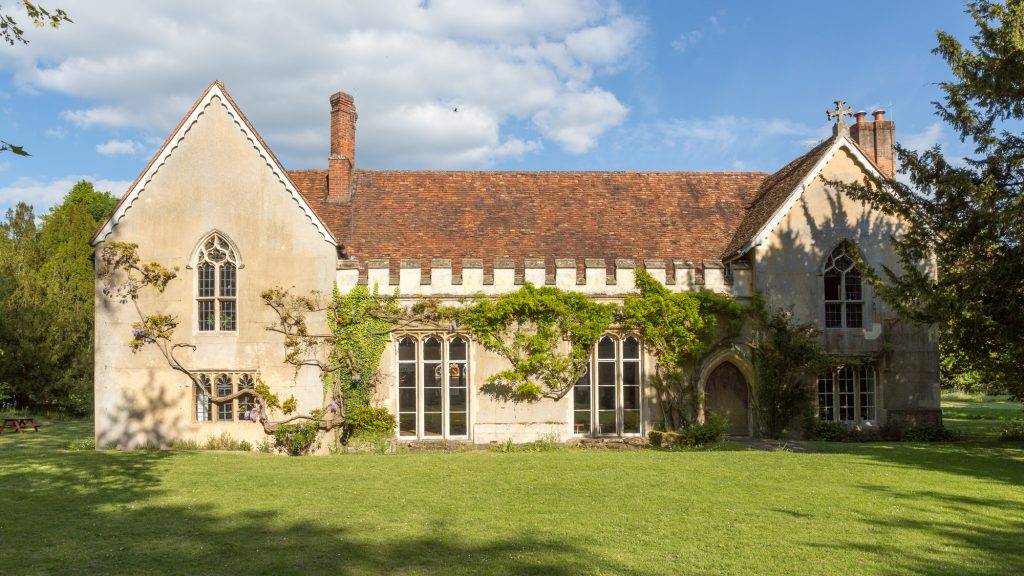
Despite its name, The Abbey was never a monastic institution. Built in 1280 by Abingdon Abbey, it began as a rector’s house, acquiring its romantic name during the Victorian era.
Historical Layers
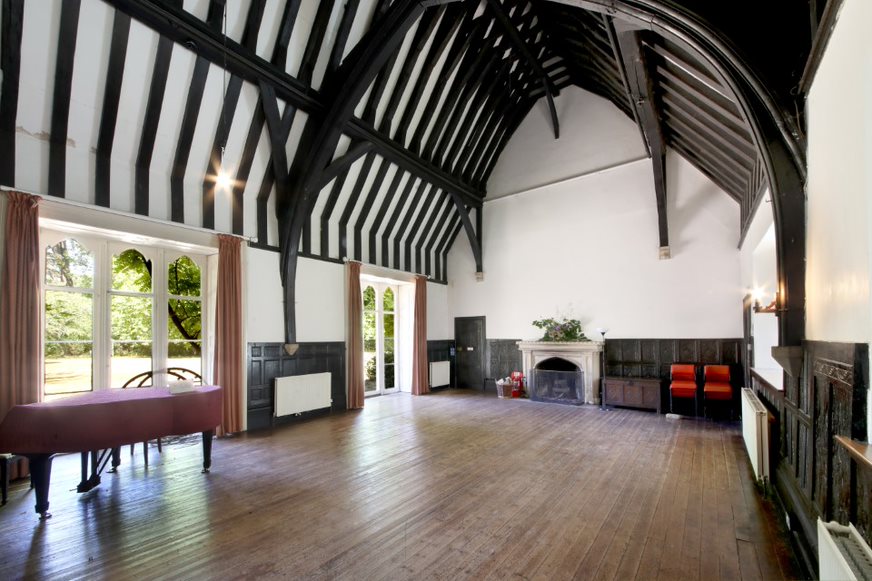
The oldest sections, the north and west ranges including the Library and Great Hall, were originally timber-framed, later encased in stone for stability. The Great Hall boasts prominent king-strut trusses, a unique feature left exposed.
Historical Layers
The oldest sections, the north and west ranges including the Library and Great Hall, were originally timber-framed, later encased in stone for stability. The Great Hall boasts prominent king-strut trusses, a unique feature left exposed.

Medieval Manor
The Abbey, a Grade I listed building, stands as a ‘textbook’ example of an English medieval Manor House. Its four ranges with clay roof tiles (originally thatch) surround a central courtyard.
Medieval Manor
The Abbey, a Grade I listed building, stands as a ‘textbook’ example of an English medieval Manor House. Its four ranges with clay roof tiles (originally thatch) surround a central courtyard.
Evolution of Space
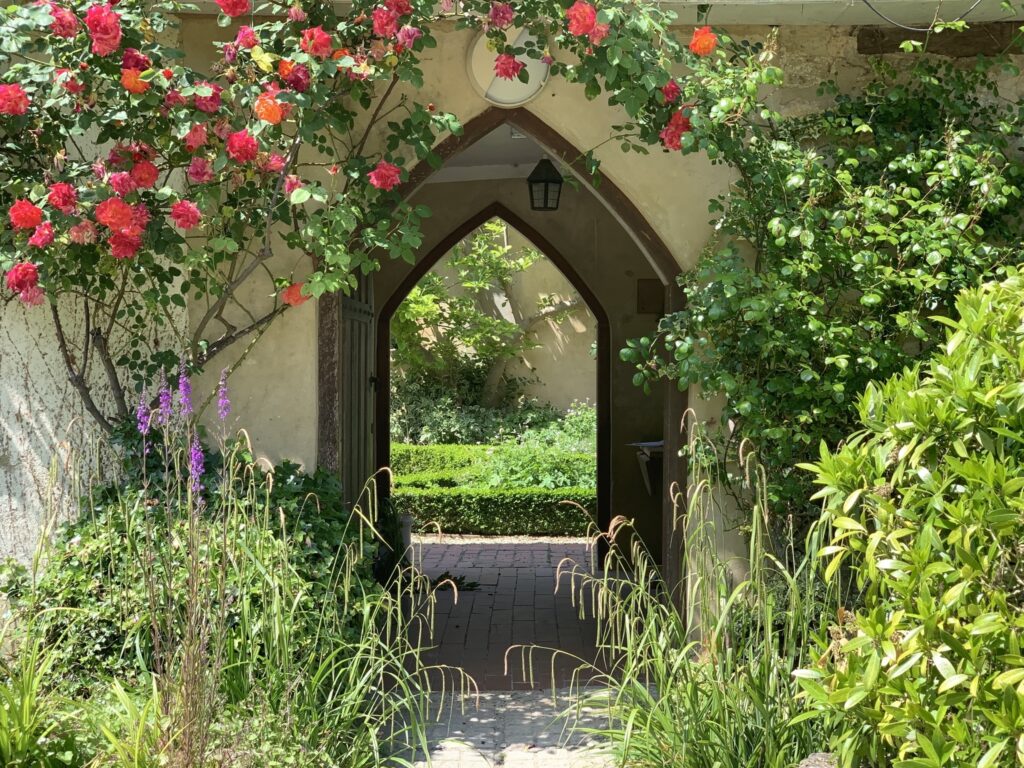
The north range’s Library and Dining Room, once a grand chamber mirroring the Great Hall, reveal two 14th-century windows and remnants of a third. The 19th century saw the division of this space and the addition of the Solar lounge (now available for hire), kitchen, and a private chapel (now a guest room).
The original main entrance, through the rear cross passage, separated the Great Hall from the service wing; the latter now houses the meditation room and accommodation.
Evolution of Space
The north range’s Library and Dining Room, once a grand chamber mirroring the Great Hall, reveal two 14th-century windows and remnants of a third. The 19th century saw the division of this space and the addition of the Solar lounge (now available for hire), kitchen, and a private chapel (now a guest room).
The original main entrance, through the rear cross passage, separated the Great Hall from the service wing; the latter now houses the meditation room and accommodation.
Nature
The Abbey grounds, encompassing over four acres, offer a rich tapestry of flora and fauna, a sanctuary for both wildlife and visitors. Enclosed by ancient stone walls, dead hedging, and wooden fencing, the grounds provide diverse habitats.
Trees and Woodlands
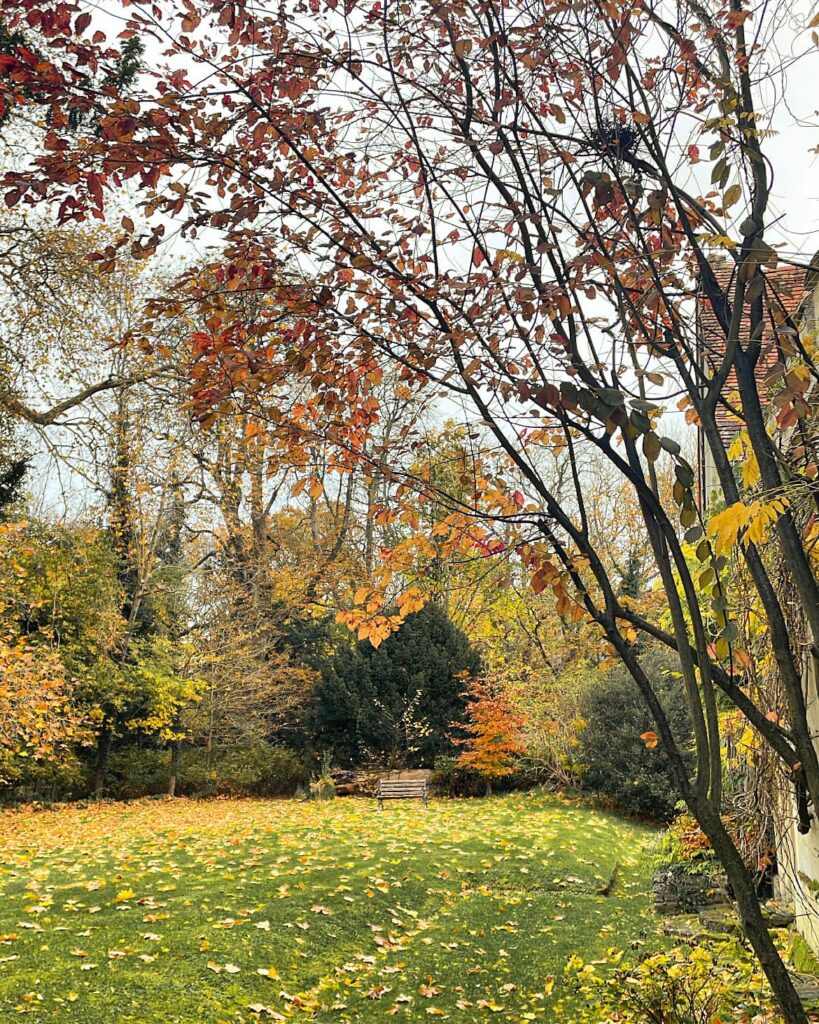
The Abbey grounds boast a rich variety of mature trees, including a grand cedar of Lebanon and ancient oaks, creating diverse woodland areas. A fragrant avenue of lime trees welcomes visitors, and the lawns are punctuated with seasonal blooms. The diverse tree life provides a vital habitat for a range of wildlife, and areas of the grounds showcase unique features, such as lichen-covered trunks and fruit trees.
Trees and Woodlands
The Abbey grounds boast a rich variety of mature trees, including a grand cedar of Lebanon and ancient oaks, creating diverse woodland areas. A fragrant avenue of lime trees welcomes visitors, and the lawns are punctuated with seasonal blooms. The diverse tree life provides a vital habitat for a range of wildlife, and areas of the grounds showcase unique features, such as lichen-covered trunks and fruit trees.
Gardens and Flowerbeds
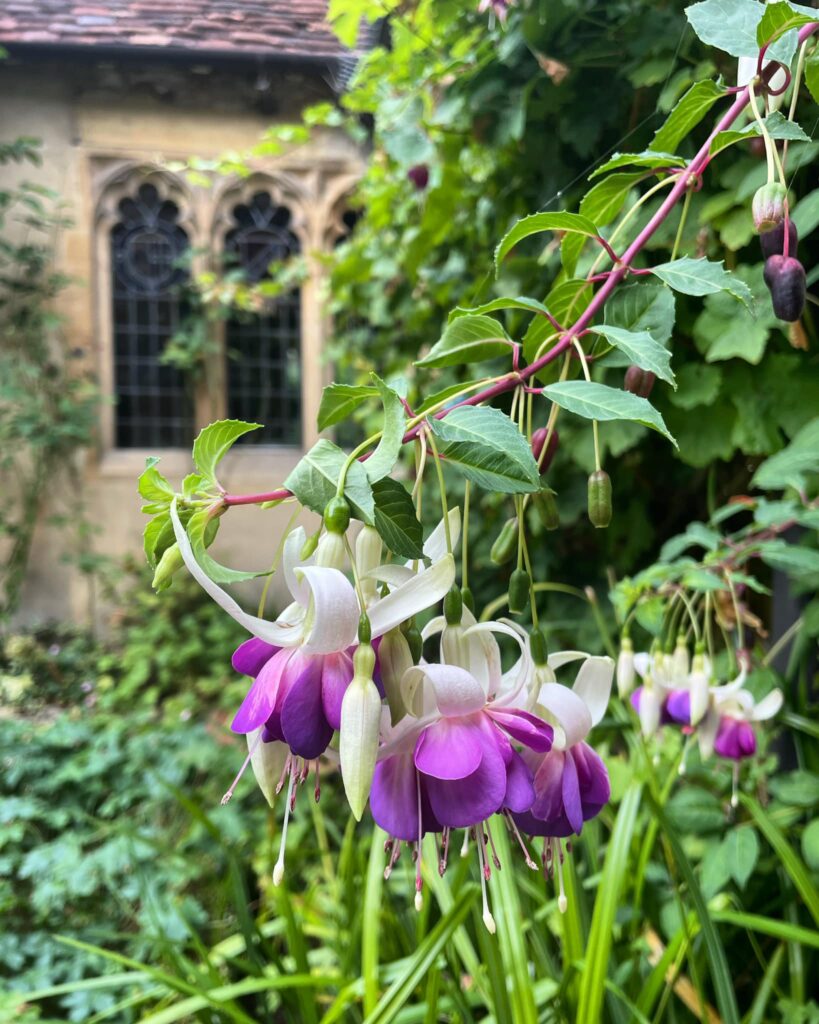
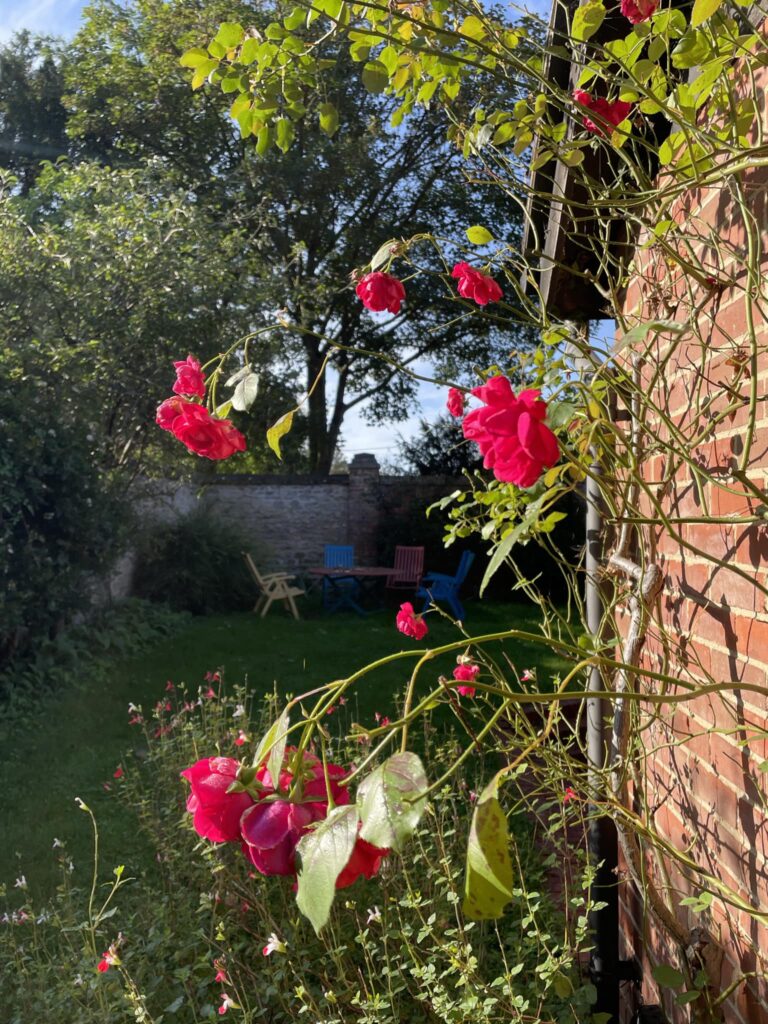
The gardens surrounding the Abbey are a vibrant tapestry of colour and texture. Flowering borders near the building offer a mix of aromatic herbs, such as rosemary and sage, and colourful blooms. A dedicated kitchen garden provides herbs such as parsley and coriander, as well as fresh produce including courgettes and potatoes. Throughout the grounds, shrubbery and flowering bushes add layers of diversity, and climbing plants adorn the guesthouse area. The courtyard garden offers a peaceful haven, with a mix of flowering shrubs and a traditional herb garden.
Gardens and Flowerbeds
The gardens surrounding the Abbey are a vibrant tapestry of colour and texture. Flowering borders near the building offer a mix of aromatic herbs, such as rosemary and sage, and colourful blooms. A dedicated kitchen garden provides herbs such as parsley and coriander, as well as fresh produce including courgettes and potatoes. Throughout the grounds, shrubbery and flowering bushes add layers of diversity, and climbing plants adorn the guesthouse area. The courtyard garden offers a peaceful haven, with a mix of flowering shrubs and a traditional herb garden.
Wildlife
The Abbey grounds are a haven for a diverse range of wildlife. You’ll find hedgehogs, squirrels, and deer roaming freely. A rich variety of insects, including numerous bee and butterfly species, thrive here. These insects not only enrich the gardens but also contribute to the production of delicious honey within the grounds. A wide array of birdlife, from birds of prey to songbirds, find refuge here.
Wildlife
The Abbey grounds are a haven for a diverse range of wildlife. You’ll find hedgehogs, squirrels, and deer roaming freely. A rich variety of insects, including numerous bee and butterfly species, thrive here. These insects not only enrich the gardens but also contribute to the production of delicious honey within the grounds. A wide array of birdlife, from birds of prey to songbirds, find refuge here.
Walled Garden
The walled kitchen garden is a sun-drenched haven, a place of peace and abundance.
In today’s fast-paced world, this garden offers a serene retreat, nurturing both body and soul.
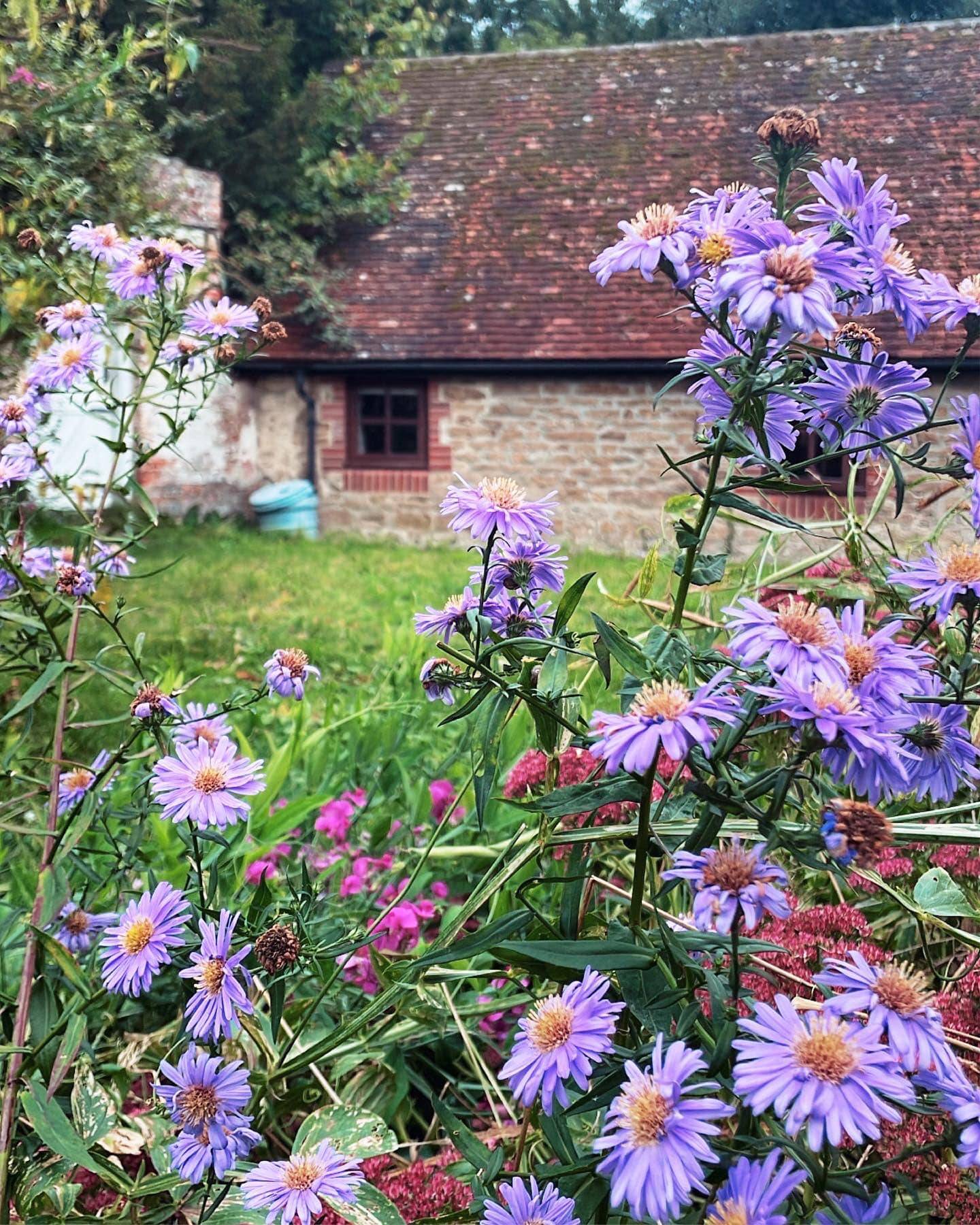
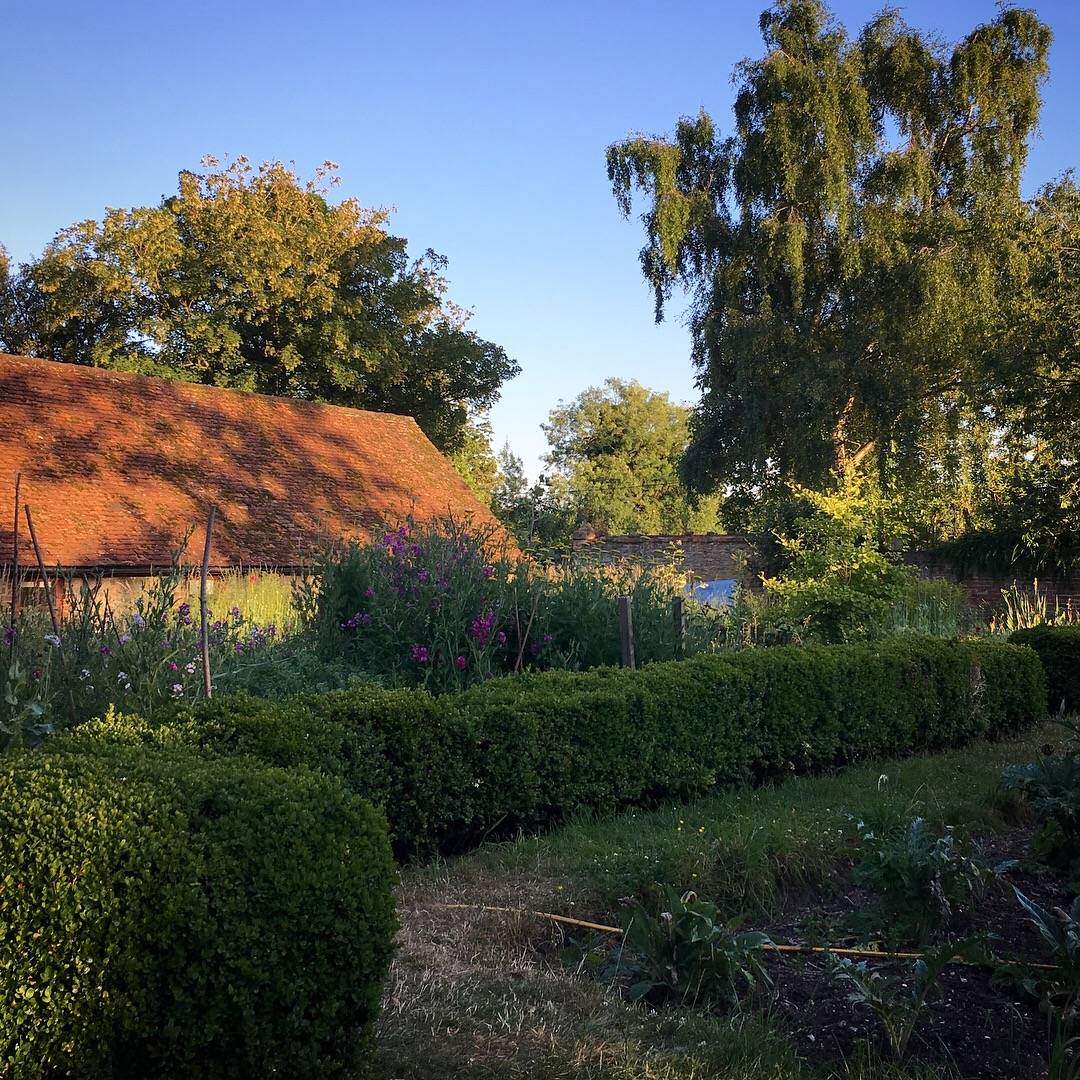
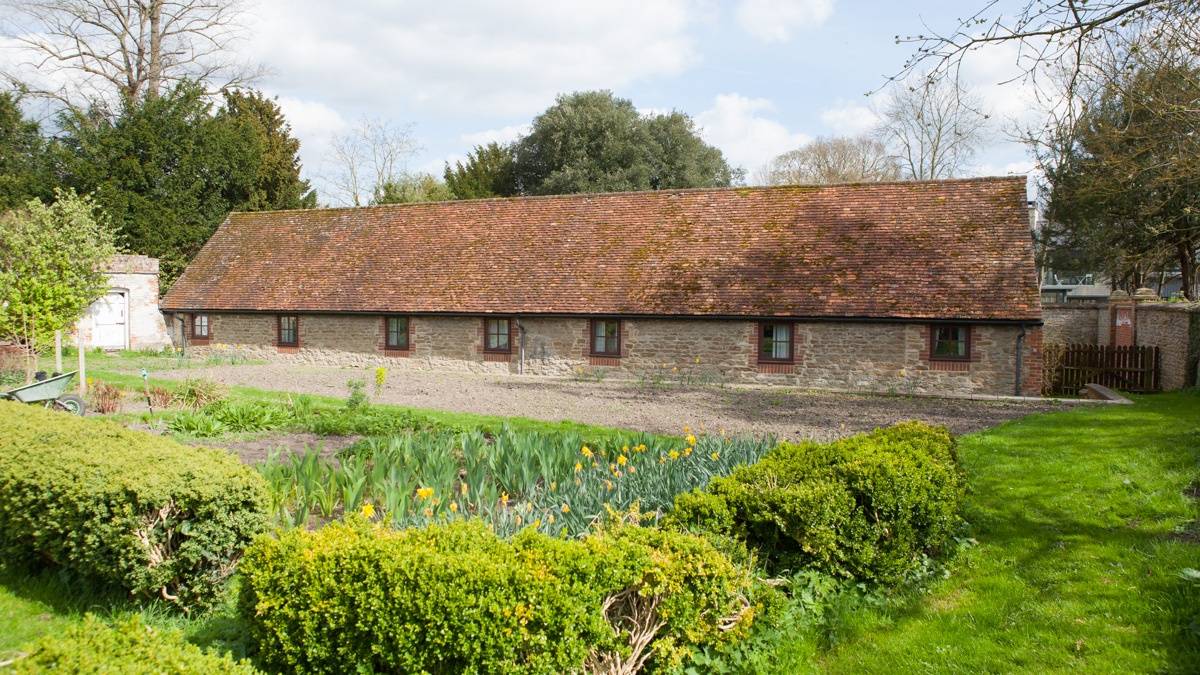
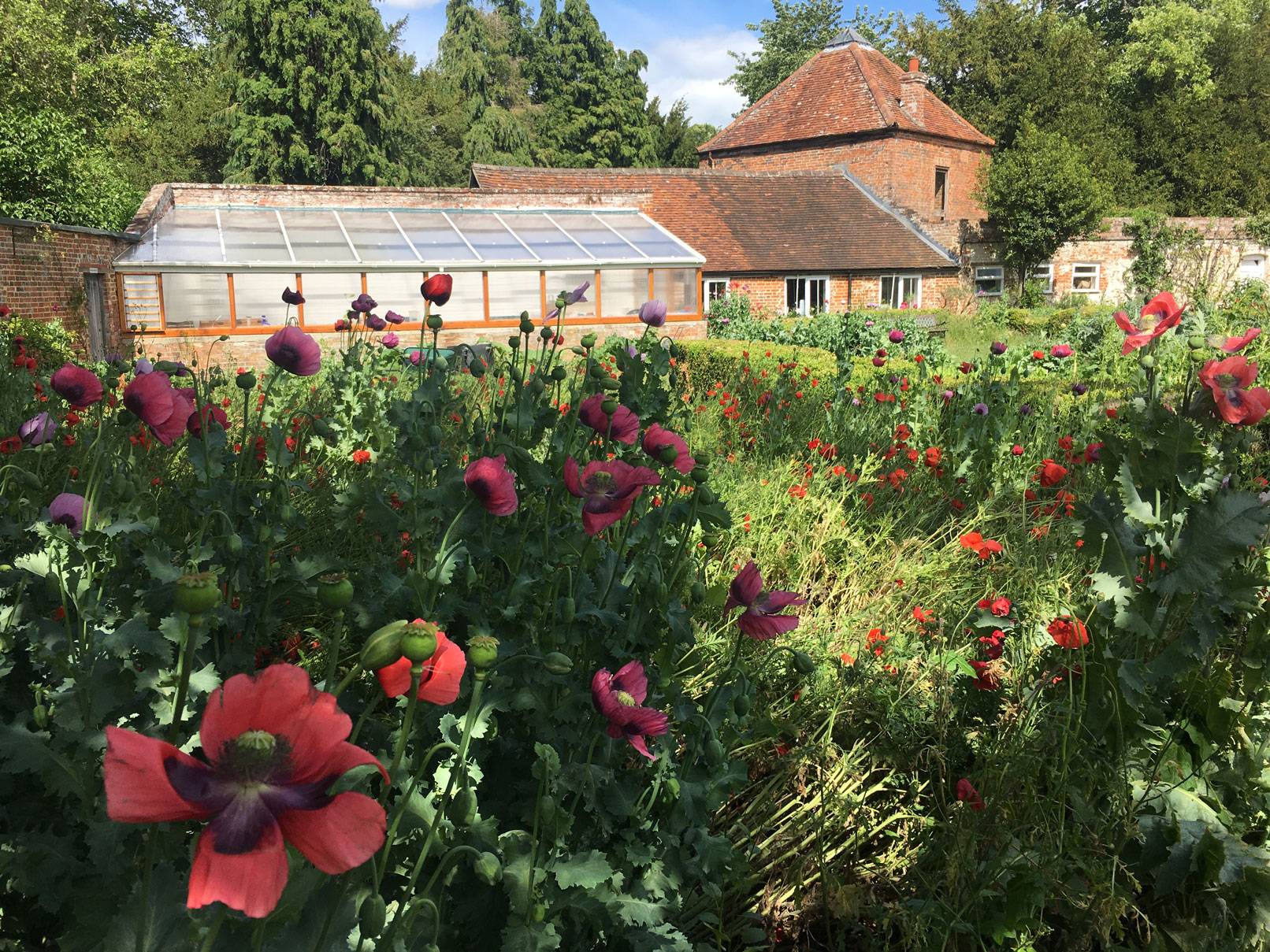
The garden features a wildflower meadow, a cut flower bed, and a strawberry patch.
Fruit trees include olive, fig, morello cherry, damson, plums, pear, quince, and greengages.
Shrubs such as buddleia, dogwoods, musk mallow, purple elder and philadelphus line the walls.
Vegetables grown here include leeks, courgettes, maize, artichokes, chard, kale, marrows, pumpkins, carrots, and potatoes.
A greenhouse provides shelter for winter rocket, parsley, and coriander.


A dedicated team of local volunteers contributes to the upkeep, development, and conservation of the garden.
Join to help maintain this space as a sanctuary for both nature and people.